
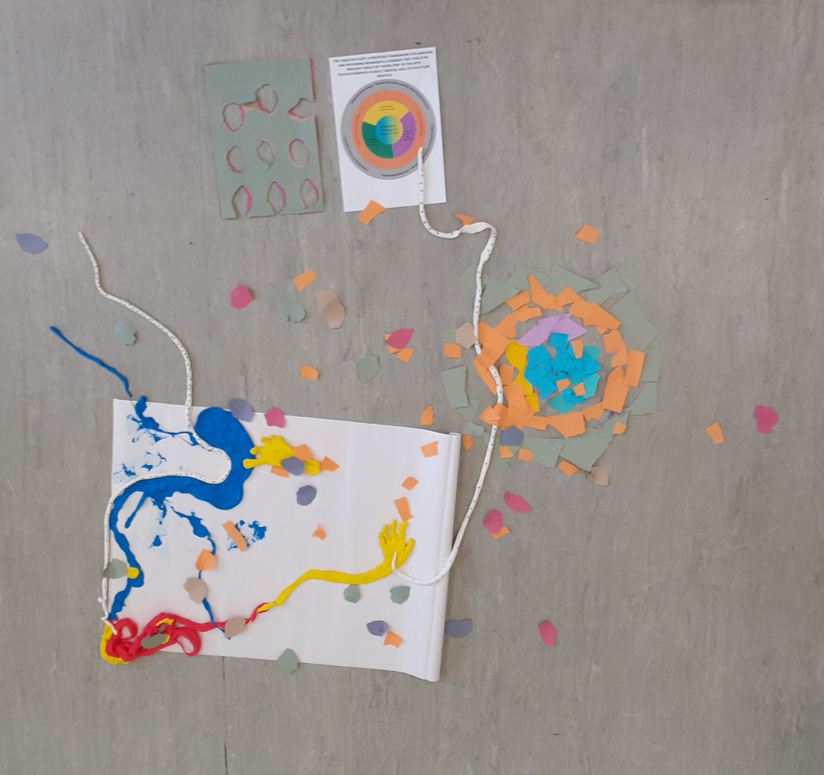
In NHS Lothian’s community mental health services, music therapist Emma Maclean saw that traditional outcome measures didn’t reflect the deep, relational healing that happens in arts therapies. With support from the Music Therapy Charity, she launched the CREATOR study—an innovative research project that brought together service users, therapists, and referrers to co-design a new way of measuring the meaningful relational impact arising from arts-based therapies.
Through creative workshops, participants explored how music and art could help them reconnect with themselves and others. The result was a flexible, person-centred framework to evaluate and understand services. The framework helps empower people to shape their own therapeutic journeys and communicate progress in ways that truly matter. The Music Therapy Charity’s funding helped make these workshops possible, supporting a more compassionate and responsive approach to mental health care.
Persons requesting assistance from arts therapists in statutory adult mental health community outpatient settings have usually experienced some level of relational trauma. They may be finding it challenging to notice and manage complex emotions and ways of being in relation to others. Music and Art Psychotherapists facilitate active participation in music or art to create spaces to re-work relational sensitivities in action, whilst forming arts-based representations for more explicit reflections. Together these processes can generate increased awareness of the self as agent in dynamic relation with others and build towards meaningful social transformations. The CREATOR study addresses a concern that current routine outcome measures, which use self-reports on pre-determined domains of distress or well-being, do not reflect important relational complexities or meaningful shifts in everyday life, friendships, and communities.
The CREATOR study formed the third phase of a professional doctorate. In phase 1 I explored the problem in context. In phase 2, to build an advance in practice a framework for personalised measures was co-created with art therapy colleagues and strengthened and refined in practice. In the final phase the CREATOR study invited persons who have used, practiced, managed, and referred to the arts therapies to consider how we create the conditions for the therapist and person attending an arts therapy to work together to agree and review meaningful changes. A series of workshops with co-researchers aimed to create ongoing critical questions for cycles of arts-based transformational action research. Person-centred facilitation built communicative spaces to guide participants through creative activities and facilitate a deep exploration of the research question. Linking arts-based explorations with nominal group technique incorporated different ways of knowing generating new actions to be explored in practice.
Co-researchers generated a framework and five key principles. It was agreed that the framework should be flexible and encourage ongoing critical awareness of the dynamic relations, friendships, and communities which can enable or hinder the process of agreeing meaningful changes. It was agreed that foundational and preparative work helps to co-create brave spaces in which authentic and meaningful changes can be co-shaped and reviewed. The culture should ensure value is placed on the ongoing connections with supports within the practice environment and the wider community. The central part of the framework articulates the ongoing processes of agreeing and reviewing personalised measures, which include co-creating a map for therapy, ongoing reviews of what is meaningful and finding ways to communicate what is happening to wider supports. These processes encourage active participation to make meanings together and enable meaningful changes in everyday life to spread out towards wider supports, friendships, and communities.
The framework and principles aim to support ongoing transformations of a measurement culture underpinned by a positivist paradigm – which can value a one-size-fits-all approach to understanding impact. Further research will monitor ongoing embedding of both the framework and principles within community arts therapies services. Additional projects have been generated by the research, including the empowerment group securing charitable funding to make an animation about experiences within the arts therapies strengthening preparation for using the Arts Psychotherapies.
Emma Maclean is a music therapist and lead arts psychotherapist for the community team in NHS Lothian. She is also a lecturer in music therapy and professional doctorate candidate at Queen Margaret University.